

Neck Pain in Delray Beach: Causes, Chiropractic Care, and When to Seek Help
Neck pain can sneak up after a long day at your desk, a weekend of yardwork, or even a poor night’s sleep. It can also be sharp and sudden after a quick head turn. However it starts, neck pain makes everyday life harder. Here at Alter Chiropractic in Delray Beach, we help people understand why their neck hurts and what they can do about it—safely, simply, and without scary medical jargon. In this guide, you’ll learn what neck pain really is, common causes, how chiropractic fits in, and when it’s smart to get help.
What is neck pain? Neck pain is discomfort, stiffness, or irritation in the cervical spine (the seven small bones at the top of your spine) and the surrounding muscles, joints, and ligaments. It often results from strain, posture habits, or irritated joints. Most cases are mechanical, meaning they relate to how things move, not disease.
Table of Contents
- What Neck Pain Really Is
- Common Causes of Neck Pain
- Signs and Symptoms You Shouldn’t Ignore
- The Biomechanics Behind Neck Pain (Simply Explained)
- Why See a Chiropractor for Neck Pain
- What to Expect at Alter Chiropractic
- Safe, At-Home Tips to Feel Better
- When to See a Chiropractor in Delray Beach
- Red Flags: When to Seek Medical Care First
- Myths and Facts About Neck Pain and Chiropractic
- Final Thoughts for Our Delray Beach Community
What Neck Pain Really Is
Your neck is a busy intersection. Seven vertebrae stack like small blocks. Discs cushion movement. Facet joints guide motion. Muscles, tendons, and ligaments support and steer your head. When any one of these parts gets stiff, irritated, or overworked, you feel it as pain, tightness, or reduced motion.
Most neck pain is mechanical. That means it relates to movement patterns, posture, and stress on the tissues. The good news: mechanical neck pain often responds well to conservative care like chiropractic, targeted exercise, and lifestyle changes.
Common Causes of Neck Pain
Neck pain has many triggers. Some are sudden, like a quick twist while driving. Others build up over time, like looking down at a phone for hours. Here are frequent culprits we see at Alter Chiropractic.
| Common Cause | How It Stresses Your Neck | Everyday Example |
|---|---|---|
| Tech posture (“text neck”) | Increases forward head position and muscle strain | Hours on a laptop or phone |
| Prolonged sitting | Reduces joint movement and circulation | All-day desk work without breaks |
| Muscle tension and stress | Over-activates upper traps and neck extensors | Clenching jaw during deadlines |
| Sleep position or pillows | Places the neck in end-range positions for hours | Stomach sleeping or too-high pillows |
| Previous injury | Leaves joints or soft tissues sensitive | Old sports sprain or minor car accident |
| Overhead or repetitive work | Loads the cervical joints and shoulder girdle | Painting, lifting, or warehouse tasks |
Signs and Symptoms You Shouldn’t Ignore
Neck pain ranges from a mild ache to a sharp catch. Some people notice stiffness when turning to check a blind spot. Others feel a nagging ache into the shoulder blade. Tingling or numbness can occur if a nerve is irritated, but this is not always the case.
Watch for patterns. Does morning stiffness ease with a warm shower? Does desk work make it worse by late afternoon? Tracking what helps or flares your neck gives us useful clues during your exam.
The Biomechanics Behind Neck Pain (Simply Explained)
Your head is like a bowling ball balanced on a flexible stalk. When the head sits directly over your shoulders, the load is shared evenly. When it drifts forward, the leverage increases. That means the muscles in the back of the neck must pull harder just to hold your head up.
Facet joints work like tiny gears that guide motion. If a joint gets stiff, nearby segments and muscles work overtime. That can lead to trigger points, tension headaches, or a “crick” in your neck. Healthy necks move often and in many directions. Movement is food for your joints.
Why See a Chiropractor for Neck Pain
Chiropractors focus on how your spine moves and how that movement affects surrounding muscles and nerves. For mechanical neck pain, care commonly includes gentle joint work (adjustments or mobilization), soft-tissue techniques, and movement guidance. Evidence suggests that spinal manipulation and mobilization, especially when combined with exercise, can help reduce neck pain and improve function in many people. Research from groups like the Cochrane Collaboration has reported benefit for certain types of neck pain with manual therapy combined with exercise. We present options and choose what fits your body and comfort level.
Safety matters. Serious complications from neck manipulation are rare, but they have been reported. We screen carefully, use conservative techniques when needed, and discuss options so you feel informed. The National Center for Complementary and Integrative Health (NCCIH) provides an overview of spinal manipulation safety and use. If manipulation isn’t right for you, there are many other ways we can help your neck move and feel better.
Chiropractic care is often a helpful part of a broader, non-invasive plan. It can complement physical therapy, massage, and home exercise. It can also be a good first step before considering medications or more invasive options. Every plan is individualized.
Sources for further reading: Cochrane Library overview on manipulation/mobilization for neck pain (mixed but generally supportive when combined with exercise); NCCIH on spinal manipulation safety and use.
What to Expect at Alter Chiropractic
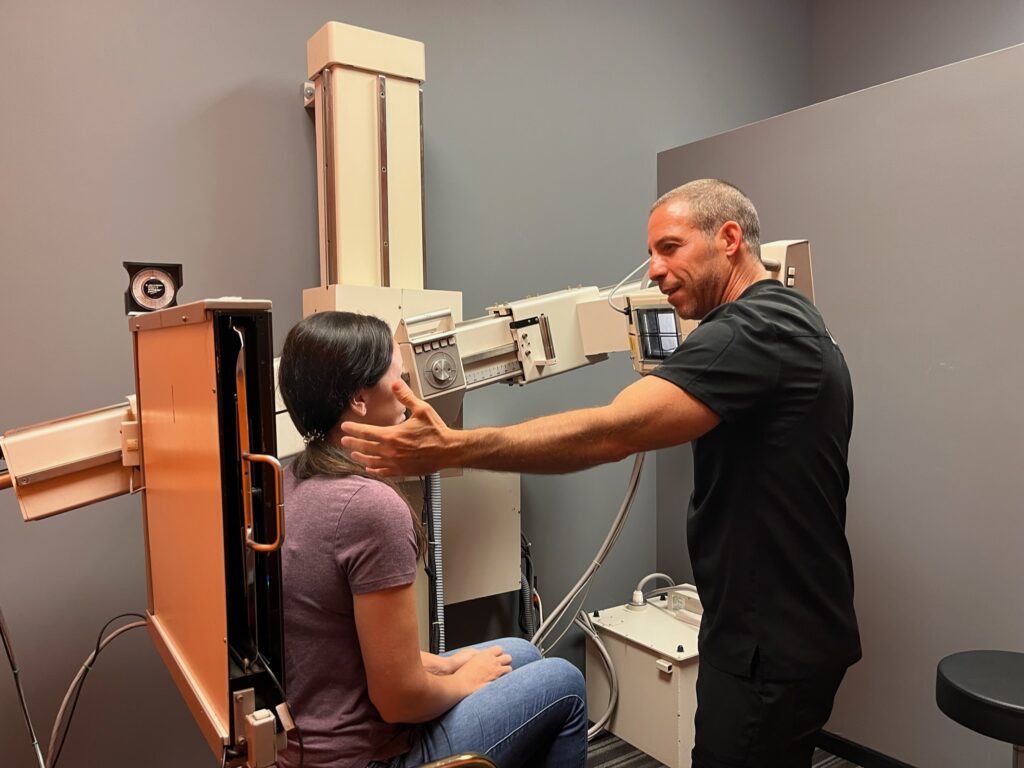
We start with a conversation. You’ll share your story, injury history, work setup, and habits. Then we perform a focused exam. We look at posture, range of motion, joint movement, and muscle tone. If anything suggests a condition that needs medical imaging or referral, we’ll explain why and help coordinate it.
Your plan is tailored. Some patients do best with gentle mobilization and soft-tissue work. Others benefit from specific adjustments. We blend care with active rehab, because strong, coordinated muscles help protect your neck between visits.
We also coach you on daily habits. A few small changes to your workstation, pillow, or warm-up routine can make a big difference. Our goal is simple: less pain, better movement, and confidence to manage your neck going forward.
Safe, At-Home Tips to Feel Better
- Micro-breaks beat marathons. Every 30–45 minutes, gently roll your shoulders, look side to side, and tuck your chin slightly. Movement keeps joints nourished and reduces tension.
- Neutral eyes, neutral neck. Raise screens so your eyes look straight ahead. If you use a laptop, consider a stand and external keyboard. Your neck will thank you.
- Pillow check. Aim to keep your neck in line with your spine when you sleep. Side or back sleeping usually works best. If you wake with stiffness, your pillow may be too high or too flat.
- Hydrate and walk. Light activity improves circulation and reduces stiffness. A short walk at lunch often reduces end-of-day tightness.
- Easy mobility before intensity. Before workouts, add gentle neck and shoulder blade motions. Save heavier lifts or overhead work until your neck is warm and moving well.
When to See a Chiropractor in Delray Beach
It’s reasonable to see a chiropractor when neck pain lasts more than a few days, keeps returning, or limits daily life. If turning your head to drive is tough, if screen time always flares symptoms, or if simple stretches stop helping, it’s time for a professional look.
Here in Delray Beach, we meet many active adults, remote workers, and retirees who juggle golf, pickleball, and computer time. Your neck deals with all of that. If it’s talking to you, we’ll listen and create a plan that fits your goals and schedule.
Red Flags: When to Seek Medical Care First
Most neck pain is not an emergency. Still, certain signs need prompt medical evaluation. If you have recent major trauma, unexplained fever or weight loss, progressive weakness, new coordination problems, difficulty walking, or changes in bowel or bladder control, seek medical care immediately. If you have severe, unrelenting headache unlike your usual, sudden neurological symptoms, or anything that feels alarming or rapidly worsening, go to urgent care or the ER. We are happy to collaborate with your medical team when needed.
Myths and Facts About Neck Pain and Chiropractic
Myth: “Neck pain means something is seriously damaged.” Fact: Most neck pain is mechanical and improves with conservative care and smart habits.
Myth: “Once you see a chiropractor, you have to go forever.” Fact: Care plans are individualized. Many people improve in a short series of visits and use tune-ups only as needed.
Myth: “Adjustments are the only thing chiropractors do.” Fact: We use a toolbox: joint mobilization, soft-tissue work, exercise, posture coaching, and ergonomic strategies. We match the method to you.
Myth: “If it hurts, I should stop moving.” Fact: Gentle, guided movement usually helps necks recover faster than total rest.
Final Thoughts for Our Delray Beach Community
Neck pain can be frustrating, but you don’t have to figure it out alone. At Alter Chiropractic, we combine hands-on care with clear education so you know why your neck hurts and what to do next. If you live or work in Delray Beach and your neck is keeping you from driving comfortably, hitting the gym, or enjoying the beach, we’re here to help you move with confidence again.
FAQs
Is chiropractic safe for neck pain?
For most people, chiropractic care is considered safe when delivered by a trained professional. Serious complications are rare. We screen carefully and tailor techniques to your needs.
Do I need X-rays or an MRI before seeing a chiropractor?
Not usually. Most uncomplicated neck pain doesn’t require imaging at first. If your history or exam suggests otherwise, we’ll explain why and help coordinate it.
How many visits will it take to feel better?
It varies. Some people notice relief within a few visits. Others need several weeks, especially if pain is longstanding. We reassess progress and adjust the plan together.
Should I see a chiropractor or a massage therapist?
Both can help, often together. Chiropractors assess joint motion, nervous system involvement, and movement patterns. Massage focuses on soft tissues. Your plan may include both.
Can chiropractic help with tension headaches?
It can for many people, especially when neck tension or joint irritation contributes to headaches. We also coach posture and stress strategies to reduce triggers.
What is “text neck,” and can a chiropractor help?
“Text neck” refers to neck strain from prolonged looking down. We address joint irritation, reduce muscle tension, and teach simple changes to your setup and habits.
TL;DR
- Most neck pain is mechanical and responds well to conservative care, including chiropractic, exercise, and better daily habits.
- Common triggers include tech posture, prolonged sitting, stress, sleep position, and past injuries.
- Chiropractors assess movement, joints, and muscles, then use a mix of gentle hands-on care and exercises.
- See a chiropractor if pain lingers, keeps returning, or limits life; seek medical care first for red-flag symptoms.
- Here in Delray Beach, Alter Chiropractic offers personalized plans to help you move comfortably and confidently.
References for patient education: Cochrane Library overview on manipulation/mobilization for neck pain (evidence mixed but supports manual therapy with exercise in many cases); NCCIH “Spinal Manipulation: What You Need To Know” for safety and general guidance.