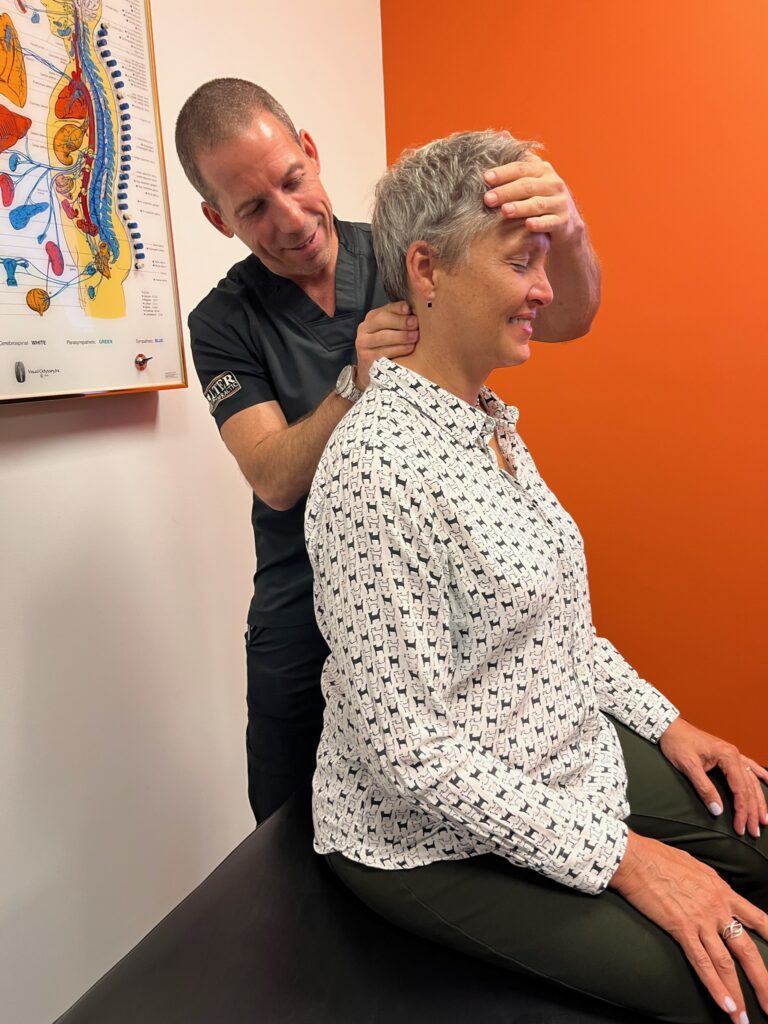
As a local chiropractor, I often see patients struggling with back pain, and one of the most effective ways to alleviate discomfort is by adjusting your posture. Emphasizing proper alignment is crucial for maintaining a healthy spine and can lead to significant relief. By incorporating a few simple techniques into your daily routine, you can greatly improve how you feel. So, what specific posture practices should you start using? Let’s delve into five effective strategies that can transform your well-being and support your journey towards natural healing.
Maintain a Neutral Spine
As your local chiropractor, I want to emphasize the importance of maintaining a neutral spine to help alleviate back pain and enhance your overall well-being. A neutral spine refers to the alignment of your head over your shoulders and your shoulders over your hips. This alignment is crucial when you walk, sit, or stand.
It’s important to engage your core muscles, as they provide the necessary support for your spine. Many people unknowingly slouch or lean forward, which can put unnecessary strain on their backs.
If you find yourself sitting for long periods, I recommend choosing a chair that offers proper lumbar support. This will allow your spine to maintain its natural curvature. Additionally, make sure your feet are flat on the floor and your knees are at a right angle to further support your posture.
When it comes to lifting objects, remember to bend at your knees rather than your waist, and keep the load close to your body. This technique helps distribute weight evenly and reduces pressure on your back.
Incorporating these habits into your daily routine can significantly improve your spinal health and reduce discomfort. By understanding and practicing the principles of a neutral spine, you’re taking proactive steps towards better health and wellness.
If you have any questions or would like personalized advice, please feel free to reach out during your next visit.
Adjust Your Workstation Ergonomics
As a local chiropractor, I want to share some important tips on how to adjust your workstation ergonomics, especially if you find yourself spending long hours at a desk. Making these adjustments can greatly help in preventing back pain and promoting overall spinal health.
First and foremost, it’s essential that your chair provides adequate support for your lower back. This support helps maintain the natural curve of your spine. Ensure that your feet are flat on the floor or on a footrest, with your knees bent at a 90-degree angle. This position minimizes stress on your lower back and encourages proper alignment.
Next, pay attention to the height of your monitor. It should be positioned at eye level to avoid the need to tilt your head, which can lead to neck strain over time. Your keyboard and mouse should be placed close enough so that your elbows remain at your sides, again forming that crucial 90-degree angle. This positioning helps reduce tension in your shoulders and arms.
If possible, opt for a chair with adjustable height and armrests to enhance your comfort throughout the day. If you primarily use a laptop, consider investing in a stand to elevate the screen to eye level, and use a separate keyboard to maintain that ergonomic alignment.
Lastly, keep items you use regularly within easy reach. This will help prevent awkward stretching and twisting, which can contribute to discomfort and strain.
Practice Mindful Sitting
As a local chiropractor, I want to emphasize that creating an ergonomic workspace is just one piece of the puzzle when it comes to alleviating back pain.
Equally important is the practice of mindful sitting. When you take a seat, it’s essential to pay attention to your posture. Make sure your feet are flat on the ground and your knees form a right angle. Avoid crossing your legs, as this can put unnecessary strain on your back. Engaging your core muscles slightly can provide vital support for your spine, and it’s crucial to sit back in your chair to preserve the natural curve of your lower back.
Don’t forget to take regular breaks. Stand up, stretch, and adjust your sitting position often. I recommend setting a timer to remind yourself to assess your posture at least once an hour. If you catch yourself slumping, take a moment to realign your body.
By being present and mindful of how you sit, you can significantly reduce the strain on your back. Practicing mindful sitting not only enhances your comfort but also boosts your focus and productivity throughout the day.
Strengthen Your Core Muscles
As a chiropractor, I want to emphasize the importance of core strength in maintaining a healthy spine and preventing back pain. Your core muscles provide essential support for your entire body, acting as a stabilizing foundation. When these muscles are strong, they help you maintain proper posture, which can significantly reduce strain on your back.
If you’re new to core strengthening, I recommend starting with basic exercises like planks, bridges, and pelvic tilts. These movements are designed to engage your abdominal muscles, lower back, and hips, all of which contribute to enhancing your overall core strength.
I encourage you to incorporate core-strengthening exercises into your weekly routine at least two to three times. As you become more comfortable, you can gradually increase the intensity and duration of your workouts. Remember, consistency is crucial—finding exercises that you enjoy will help keep you motivated.
Additionally, it’s beneficial to consciously engage your core during daily activities, whether you’re standing or sitting. By focusing on developing a strong core, you’ll not only help alleviate back pain but also enhance your overall stability and balance.
This holistic approach aligns with natural healing principles and supports your journey towards better health.
Incorporate Regular Stretching and Movement
As a local chiropractor, I want to emphasize the significant benefits that incorporating regular stretching and movement can have on your overall well-being, particularly when it comes to alleviating back pain.
Many of my patients find that simple adjustments to their daily routines can lead to remarkable improvements in flexibility and a reduction in muscle tension.
I recommend starting with straightforward stretches, such as reaching for your toes or gently twisting your torso. These movements can help release tightness in key areas. Aim to dedicate at least 10 minutes each day to stretching.
Additionally, if you find yourself sitting for prolonged periods, it’s essential to integrate short movement breaks into your routine. Standing up, walking around, or performing a few leg swings can significantly boost blood circulation and keep your muscles engaged.
Activities like yoga or Pilates are also excellent choices, as they not only enhance flexibility but also promote better posture.
It’s crucial to listen to your body as you incorporate these practices. If you experience any discomfort, don’t hesitate to modify your movements to suit your needs.
Remember, consistency is vital; making stretching and movement a regular habit can lead to lasting benefits. Over time, you may notice improved flexibility, reduced discomfort, and a stronger foundation for maintaining good posture, all of which are essential for alleviating back pain.
Let’s work together to create a healthier, pain-free lifestyle!
Conclusion
As a local chiropractor, I want to share some valuable posture techniques that can help alleviate back pain and enhance your overall comfort. It’s essential to maintain a neutral spine, which means keeping your back straight and aligned while sitting or standing. If you work at a desk, adjusting your workstation for optimal ergonomics can make a significant difference in your posture and reduce strain on your back.
I also encourage you to practice mindful sitting. This means being aware of your posture throughout the day and making adjustments as needed. Strengthening your core muscles is vital, as a strong core provides essential support for your spine. Additionally, incorporating regular stretching and movement breaks into your routine can greatly improve your flexibility and help prevent stiffness.
I recommend starting to integrate these tips into your daily life. Many of my patients notice a positive change in their back comfort and function after making these adjustments. Your body deserves the best care, and I’m here to guide you on your journey to better health and wellness!