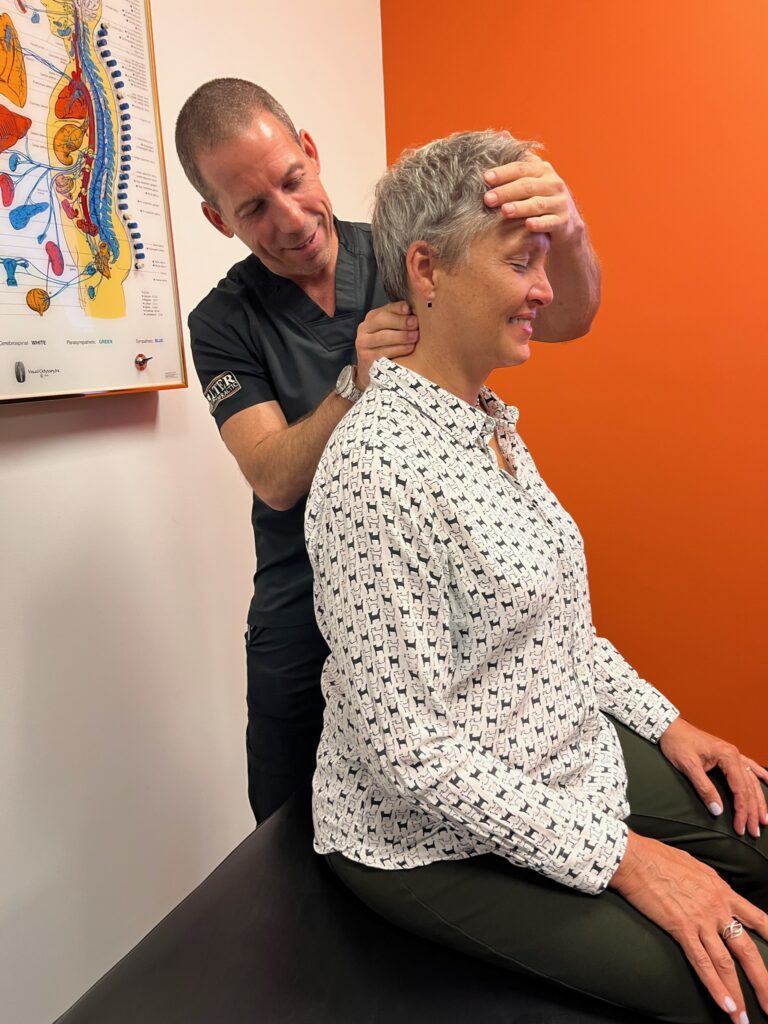


You’ve tried rest. You’ve tried ice, heat, and over-the-counter pain relievers. Maybe you’ve even gotten a massage or adjusted your pillow at night. Yet that sharp, radiating pain from your pinched nerve keeps coming back—or worse, never really goes away. If you’re reading this, you’re probably frustrated, worried, and wondering why your body isn’t healing the way it should. You’re not alone. Here in Delray Beach, we see patients every week who’ve been suffering with pinched nerve symptoms for months or even years, cycling through temporary fixes that never quite solve the problem. The truth is, most people are treating the symptoms of a pinched nerve without ever addressing what’s actually causing the nerve compression in the first place. That’s why it won’t heal—and that’s exactly what we’re going to explore in this article.
What is a pinched nerve? A pinched nerve occurs when surrounding tissues—such as bones, cartilage, muscles, or tendons—apply too much pressure to a nerve root. This compression disrupts the nerve’s function, causing pain, tingling, numbness, or weakness that can radiate along the nerve pathway into your arms, legs, hands, or feet.
Table of Contents
- Understanding What Really Happens with a Pinched Nerve
- Why Your Pinched Nerve Won’t Heal on Its Own
- Common Mistakes That Keep You Stuck in Pain
- How Chiropractic Care Addresses the Root Cause
- What Actually Works: Evidence-Based Solutions
- When to See a Chiropractor for Your Pinched Nerve
- Myths vs. Facts About Pinched Nerves
- Final Thoughts from Our Delray Beach Practice
Understanding What Really Happens with a
Pinched Nerve
Before we can understand why your pinched nerve won’t heal, we need to look at what’s actually happening inside your body. A pinched nerve—clinically called nerve compression or radiculopathy—occurs when tissues surrounding a nerve apply excessive pressure. Think of it like stepping on a garden hose. The water (or in this case, nerve signals) can’t flow properly, and everything downstream suffers.
Your nervous system is incredibly complex. Nerve roots exit your spinal column through small openings between vertebrae. When these spaces narrow due to misalignment, disc bulges, inflammation, or degenerative changes, the nerve gets squeezed. This compression interrupts the nerve’s ability to transmit signals between your brain and the rest of your body.
The most common areas for pinched nerves are the neck (cervical radiculopathy) and lower back (lumbar radiculopathy). When a cervical nerve is compressed, you might feel pain, tingling, or numbness radiating down your shoulder, arm, and into your hand. When a lumbar nerve is affected, symptoms typically travel down your buttock, leg, and sometimes into your foot. This is often what people call sciatica.
What many people don’t realize is that the pain you feel isn’t always where the actual problem is located. That shooting pain in your hand might be coming from a compressed nerve in your neck. The numbness in your foot could be originating from your lower back. This is why treating only where it hurts—without addressing the source—rarely provides lasting relief.
Why Your Pinched Nerve Won’t Heal on Its Own
Here’s the uncomfortable truth: if your pinched nerve hasn’t healed after weeks
or months of waiting, it probably won’t heal on its own. That’s not meant to scare you—it’s meant to empower you with realistic information so you can take effective action.
The reason many pinched nerves don’t heal without intervention comes down to biomechanics. If something in your spine is structurally out of alignment or if surrounding tissues remain inflamed and tight, the pressure on that nerve continues. Your body can’t heal what it can’t escape from. It’s like trying to heal a sprained ankle while continuing to walk on it improperly every single day.
Research suggests that prolonged nerve compression can lead to more serious complications over time. The longer a nerve remains compressed, the more likely you are to develop chronic pain patterns, muscle weakness, and even permanent nerve damage in severe cases. This is why addressing the root cause early matters so much.
Many patients we see at Alter Chiropractic in Delray Beach have been told to “just give it time” or to rest and see if it improves. While acute inflammation might calm down temporarily with rest, the underlying structural or functional problem that’s causing the compression typically remains. That’s why symptoms keep returning—often triggered by the same activities, postures, or movements.
Another factor that prevents healing is compensation patterns. When one part of your body hurts, you naturally adjust how you move to avoid pain. These compensations create additional stress on other joints, muscles, and nerves. Over time, what started as a single pinched nerve can evolve into a complex pattern of dysfunction affecting multiple areas of your spine and nervous system.
Common Mistakes That Keep You Stuck in Pain
We’ve treated thousands of patients with pinched nerve symptoms since opening our doors in 2006, and we’ve seen patterns emerge. Certain approaches—well-intentioned as they may be—actually prevent healing or provide only temporary relief. Understanding these mistakes can help you avoid wasting more time and money on solutions that won’t work long-term.
Relying exclusively on pain medication. Over-the-counter or prescription pain relievers can temporarily mask your symptoms, but they do absolutely nothing to address why the nerve is compressed in the first place. Once the medication wears off, you’re right back where you started. Worse, masking pain can lead you to overuse an injured area, potentially causing more damage.
Assuming rest alone will fix it. While rest can help reduce acute inflammation, prolonged inactivity often makes things worse. Joints become stiff, muscles weaken, and circulation decreases—all of which can increase nerve compression rather than relieve it. The key is knowing the difference between harmful activity and therapeutic movement.
Treating only the area that hurts. As we mentioned earlier, the source of nerve compression is often located away from where you feel symptoms. Treating only your tingling hand without addressing cervical spine alignment, or focusing solely on your leg pain without examining lumbar biomechanics, means you’re chasing symptoms instead of solving problems.
Ignoring posture and ergonomics. Many pinched nerves develop gradually due to repetitive stress and poor posture patterns. If you spend hours hunched over a computer, sleeping in awkward positions, or performing repetitive movements at work, these habits will continue compressing nerves no matter what other treatments you try.
Settling for temporary relief. Quick fixes feel good in the moment, but if you’re getting the same treatment over and over without lasting improvement, something isn’t working. Real healing means addressing the underlying cause so you can return to normal activities without constant intervention.
How Chiropractic Care Addresses the Root Cause
At Alter Chiropractic, our approach to pinched nerves is fundamentally different from simply managing symptoms. We focus on identifying and correcting the underlying cause of nerve compression—whether that’s spinal misalignment, joint dysfunction, muscle imbalance, or a combination of factors.
Evidence indicates that chiropractic adjustments can help restore proper joint motion and alignment, reducing pressure on compressed nerves. When vertebrae are properly aligned and moving correctly, the spaces where nerves exit the spine remain open and free from excessive pressure. This allows your nervous system to function optimally and gives your body the environment it needs to heal.
During your first visit to our Delray Beach office, we conduct a thorough examination to understand your unique situation. We assess your spinal alignment, range of motion, muscle tension patterns, and neurological function. We also take time to understand your daily activities, work environment, and health history. This comprehensive evaluation helps us identify not just where the nerve is compressed, but why it happened in the first place.
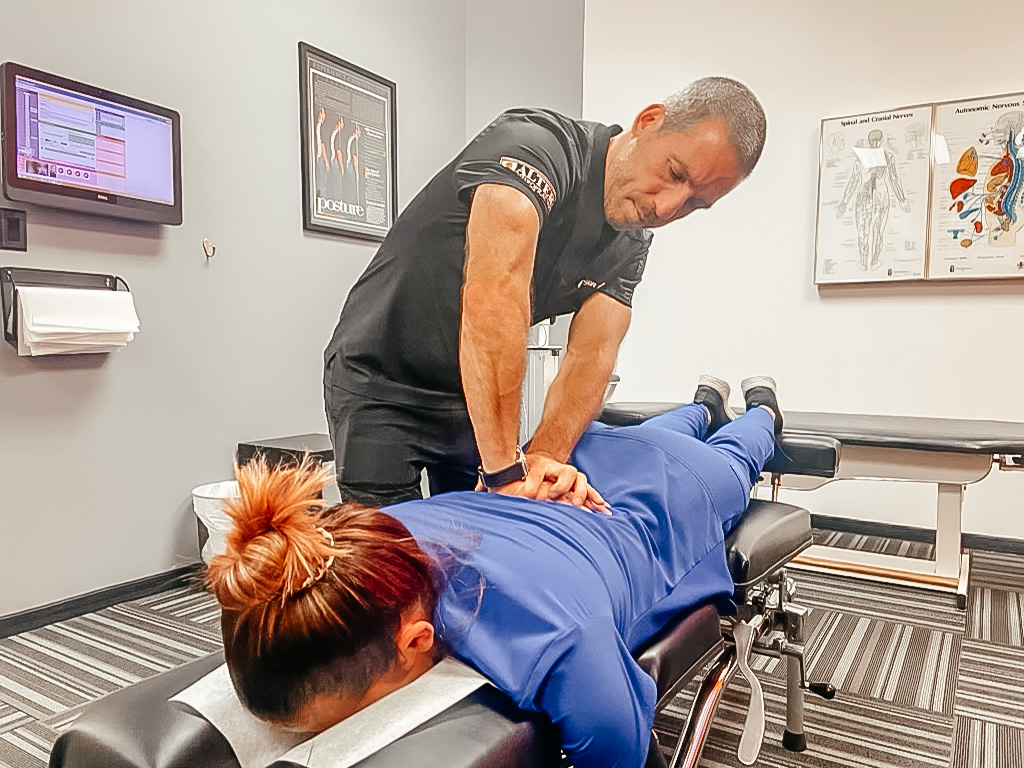
Treatment at our practice typically involves specific chiropractic adjustments targeted to the areas of dysfunction. These adjustments are gentle, precise, and tailored to your individual needs and comfort level. We’re not simply “cracking backs”—we’re restoring proper biomechanics to your spine and nervous system.
Beyond spinal adjustments, we often incorporate complementary therapies such as soft tissue work to address muscle tension, therapeutic exercises to restore strength and stability, and patient education about posture and ergonomics. This multi-faceted approach ensures we’re addressing all the factors contributing to your nerve compression.
What sets us apart after nearly two decades serving South Florida families is our commitment to natural solutions that work. We don’t offer quick fixes or temporary patches. We invest the time to understand your unique situation and create a care plan designed to produce lasting results—so you can break free from pain and return to the activities you love without constantly worrying about your symptoms returning.
What Actually Works: Evidence-Based Solutions
Now that we’ve covered what doesn’t work, let’s talk about what actually does. Effective treatment for pinched nerves requires a multi-dimensional approach that addresses both immediate symptom relief and long-term correction of underlying causes.
Spinal adjustments and manipulation. Research has shown that chiropractic adjustments can be effective for conditions involving nerve compression, particularly in the cervical and lumbar spine. By restoring proper alignment and motion to spinal joints, adjustments help reduce pressure on nerve roots while improving overall nervous system function.
Targeted therapeutic exercises. Specific exercises designed to strengthen supporting muscles, improve flexibility, and reinforce proper movement patterns are essential for long-term healing. These aren’t generic stretches you can find online—they’re customized based on your specific dysfunction patterns and gradually progressed as you improve.
Postural correction and ergonomic modifications. Identifying and changing the daily habits that contribute to nerve compression is crucial. This might include adjusting your workstation setup, modifying how you sleep, or changing how you perform repetitive tasks. Small changes in your daily environment can make an enormous difference in reducing ongoing nerve stress.
Soft tissue therapy. Tight, inflamed muscles can contribute to nerve compression either directly or by pulling joints out of alignment. Addressing muscle tension through various soft tissue techniques helps create space for nerves and supports the effects of spinal adjustments.
Patient education and self-care. Understanding what’s happening in your body and learning how to support your own healing process empowers you to maintain results long-term. We teach our patients how to recognize early warning signs, perform home exercises correctly, and make lifestyle choices that support optimal nervous system function.
The key to success is consistency and patience. Nerve tissue heals slowly, and structural changes that developed over months or years won’t reverse overnight. However, many patients begin experiencing relief within the first few weeks of care as pressure on the nerve decreases and inflammation reduces. Continued improvement comes as we address the deeper structural and functional problems.
| Symptom Management Approach | Root Cause Correction Approach |
|---|---|
| Focuses on temporary pain relief | Focuses on correcting underlying dysfunction |
| Relies on medication or passive treatments | Uses adjustments, exercises, and lifestyle modifications |
| Requires ongoing intervention to maintain relief | Builds toward independence and lasting results |
| Treats where symptoms appear | Treats the source of nerve compression |
| Offers quick but temporary improvement | Requires time but produces sustainable healing |
When to See a Chiropractor for Your Pinched Nerve
Knowing when to seek professional care can make the difference between quick recovery and months of unnecessary suffering. Here are signs that it’s time to see a chiropractor for your pinched nerve symptoms.
If you’ve had pain, tingling, numbness, or weakness that has lasted more than a few days without improvement, it’s time to get evaluated. While minor nerve irritation can sometimes resolve with rest, persistent symptoms suggest an underlying problem that needs attention.
When symptoms begin interfering with your daily activities—like difficulty sleeping, trouble working, or inability to exercise—you shouldn’t wait any longer. Quality of life matters, and there’s no reason to suffer when effective, natural solutions are available.
If your symptoms are getting progressively worse rather than better, this is a clear sign that whatever is compressing the nerve isn’t resolving on its own. Progressive symptoms can indicate increasing pressure on the nerve and should be addressed promptly to prevent more serious complications.
Recurring symptoms that come and go are another red flag. If your pinched nerve seems to “flare up” repeatedly with certain activities or positions, this pattern indicates an underlying structural or functional problem that needs correction, not just symptom management.
That said, certain symptoms require immediate medical attention and should not wait for a chiropractic appointment. Seek emergency care if you experience sudden loss of bowel or bladder control, progressive weakness in your legs or arms, symptoms in both legs simultaneously, or symptoms following significant trauma like a car accident or fall. These can be signs of serious conditions like cauda equina syndrome or spinal cord compression that require immediate medical intervention.
For most pinched nerve cases, however, chiropractic care offers a safe, effective, non-invasive approach. At Alter Chiropractic in Delray Beach, we’re equipped to evaluate your condition thoroughly, determine if we can help, and refer you to the appropriate specialist if needed. We put your health and safety first, always.
Myths vs. Facts About Pinched Nerves
Myth: Pinched nerves always heal on their own with enough time and rest
Fact: While acute nerve irritation can sometimes improve with rest, true nerve compression caused by structural problems rarely resolves without intervention. The underlying cause—whether misalignment, disc issues, or biomechanical dysfunction—typically remains unless specifically addressed, which is why symptoms persist or keep returning.
Myth: You should avoid all physical activity if you have a pinched nerve
Fact: Complete inactivity can actually worsen nerve compression by allowing muscles to weaken and joints to stiffen. The key is engaging in appropriate therapeutic movement while avoiding activities that aggravate symptoms. Your chiropractor can guide you on what movements are helpful versus harmful for your specific situation.
Myth: Cracking your own neck or back can relieve a pinched nerve
Fact: Self-manipulation is dangerous and ineffective. The “popping” sound you hear when you twist your neck or back isn’t an adjustment—it’s often just gas releasing from joints, and you may be moving the wrong segments. Chiropractic adjustments are specific, controlled, and directed at dysfunctional joints, something you cannot safely replicate on your own.
Myth: If you have a pinched nerve, you need surgery
Fact: The vast majority of pinched nerve cases respond well to conservative care, including chiropractic treatment. Surgery is typically considered only when conservative approaches have been exhausted and severe, progressive neurological symptoms persist. Many patients we see at Alter Chiropractic find lasting relief through our natural, root-cause approach without ever needing invasive procedures.
Myth: Once a pinched nerve heals, it won’t come back
Fact: If you only address symptoms without correcting the underlying cause, recurrence is likely. However, when you correct the biomechanical dysfunction, strengthen supporting structures, and maintain proper posture and movement patterns, you significantly reduce the risk of future nerve compression. This is why our focus on root causes and patient education produces such lasting results for South Florida families.
Final Thoughts from Our Delray Beach Practice
Living with a pinched nerve is frustrating, painful, and often frightening—especially when nothing seems to help. But here’s what we want you to know: you don’t have to accept chronic pain as your new normal, and you don’t have to rely on medications or invasive procedures to find relief.
After nearly two decades of serving the Delray Beach community, we’ve helped thousands of patients break free from pinched nerve pain by addressing the root cause rather than just masking symptoms. We understand that every person who walks through our doors has a unique story, unique challenges, and unique goals. That’s why we invest the time to truly understand your situation and create a personalized care plan designed to help you achieve lasting relief and optimal health naturally.
If you’re tired of temporary fixes and ready to find real answers, we’re here to help. At Alter Chiropractic, we combine evidence-based chiropractic care with patient education and lifestyle guidance to empower you to take control of your health. Our approach has earned the trust of South Florida families through consistent results and genuine care.
Your journey toward lasting relief starts with understanding what’s really causing your symptoms—and then taking action to correct it. We’d be honored to be part of that journey with you, right here in Delray Beach.
Frequently Asked Questions
How long does it take for a pinched nerve to heal with chiropractic care?
Healing time varies depending on the severity of compression, how long you’ve had symptoms, and your overall health. Many patients experience noticeable relief within the first few weeks of care, but complete resolution of underlying dysfunction typically takes longer. We’ll provide you with realistic expectations based on your specific examination findings.
Can a pinched nerve cause permanent damage?
Prolonged, severe nerve compression can potentially lead to permanent nerve damage if left untreated for extended periods. This is why addressing symptoms early is so important. The good news is that with timely, appropriate care, most pinched nerves respond well and patients make full recoveries without lasting damage.
Is chiropractic care safe for pinched nerves?
Yes, chiropractic care is widely recognized as a safe, effective option for nerve compression conditions. Research indicates that serious complications from chiropractic adjustments are extremely rare, and the benefits typically far outweigh the risks for appropriate candidates. We conduct thorough evaluations to ensure chiropractic care is right for your specific condition.
Will I need ongoing chiropractic care after my pinched nerve heals?
Our goal is to correct the problem and empower you to maintain your own health. Some patients choose to continue periodic maintenance visits to support spinal health and prevent future issues, but this is always your choice. We focus on teaching you how to recognize early warning signs and support your own wellness long-term.
Can posture really cause a pinched nerve?
Absolutely. Poor posture creates abnormal stress on your spine, gradually pulling joints out of alignment and causing structures to compress nerves. Forward head posture, rounded shoulders, and prolonged sitting are common contributors to cervical and lumbar nerve compression. Correcting these patterns is often essential to lasting relief.
What’s the difference between a pinched nerve and muscle pain?
Muscle pain is typically localized, achy, and worsens with movement of that specific muscle. Pinched nerve pain often radiates along the nerve pathway, may include tingling or numbness, and can be accompanied by weakness. It’s not always easy to distinguish, which is why proper evaluation is important.
TL;DR – Key Takeaways
- Pinched nerves often won’t heal on their own because the underlying structural or biomechanical cause remains, continuing to compress the nerve even after acute symptoms temporarily improve.
- Treating only symptoms with medication, rest, or passive therapies provides temporary relief but doesn’t address the root cause, which is why pain keeps returning.
- Chiropractic care focuses on correcting spinal alignment, restoring proper joint function, and addressing the source of nerve compression to enable natural healing and lasting relief.
- Effective treatment combines spinal adjustments, therapeutic exercises, postural correction, and patient education to both relieve current symptoms and prevent future recurrence.
- Seeking professional evaluation early—especially when symptoms persist beyond a few days, worsen progressively, or interfere with daily activities—can prevent complications and lead to faster, more complete recovery.