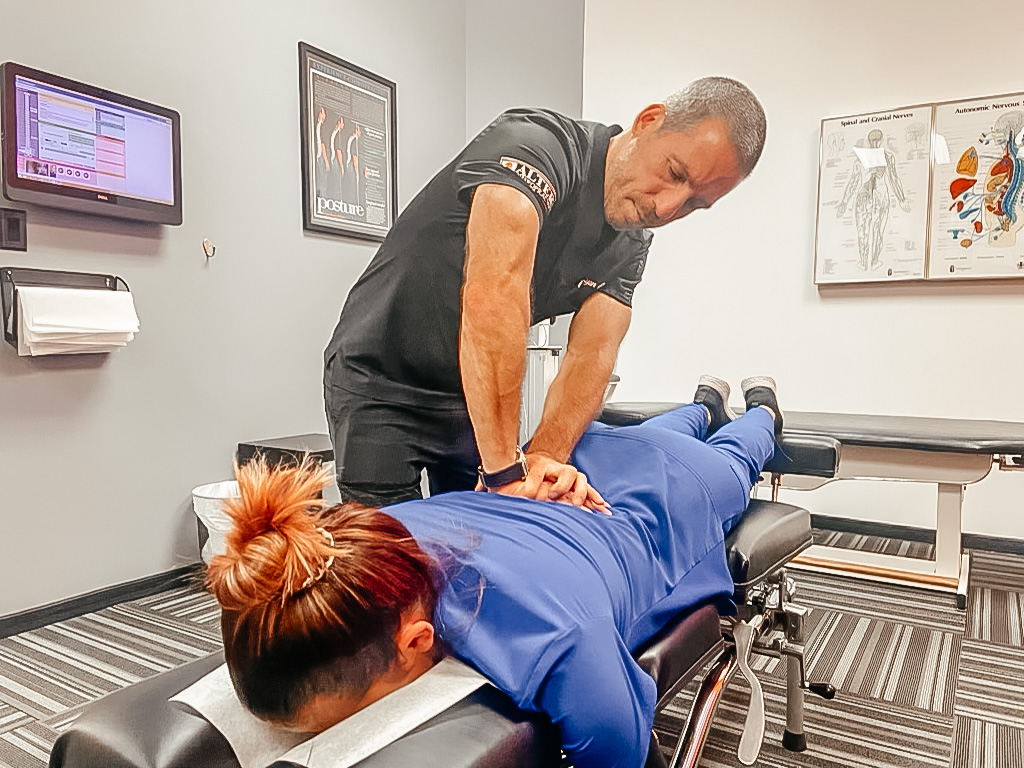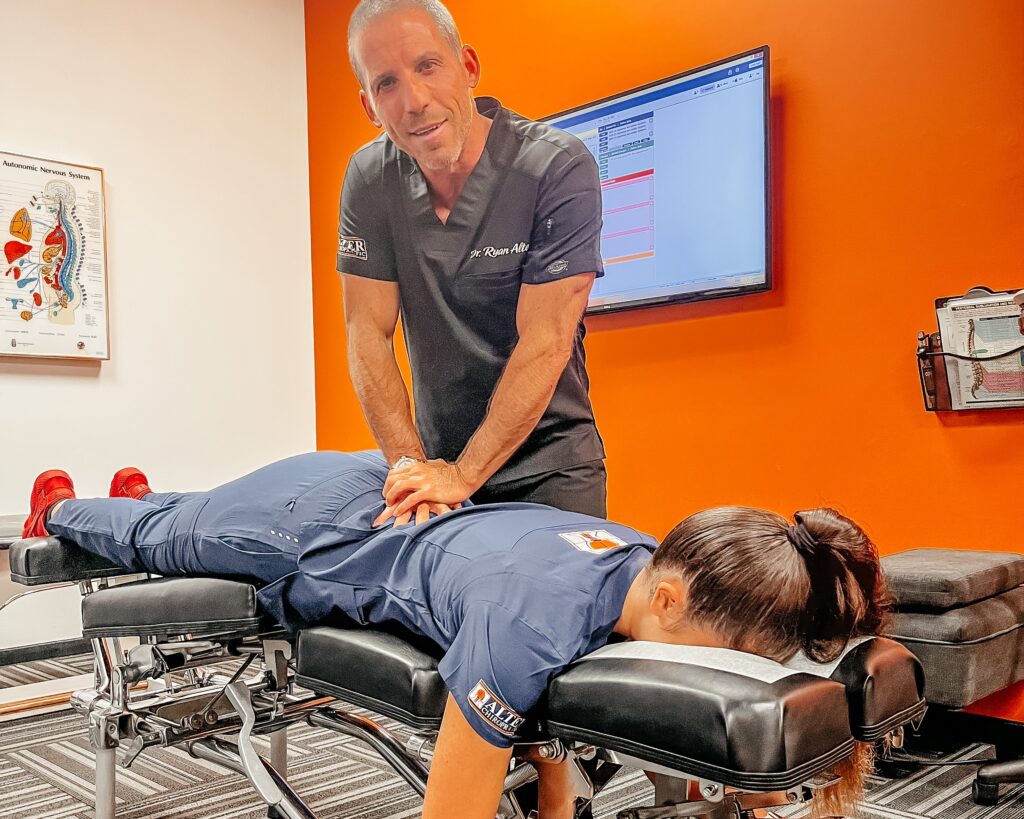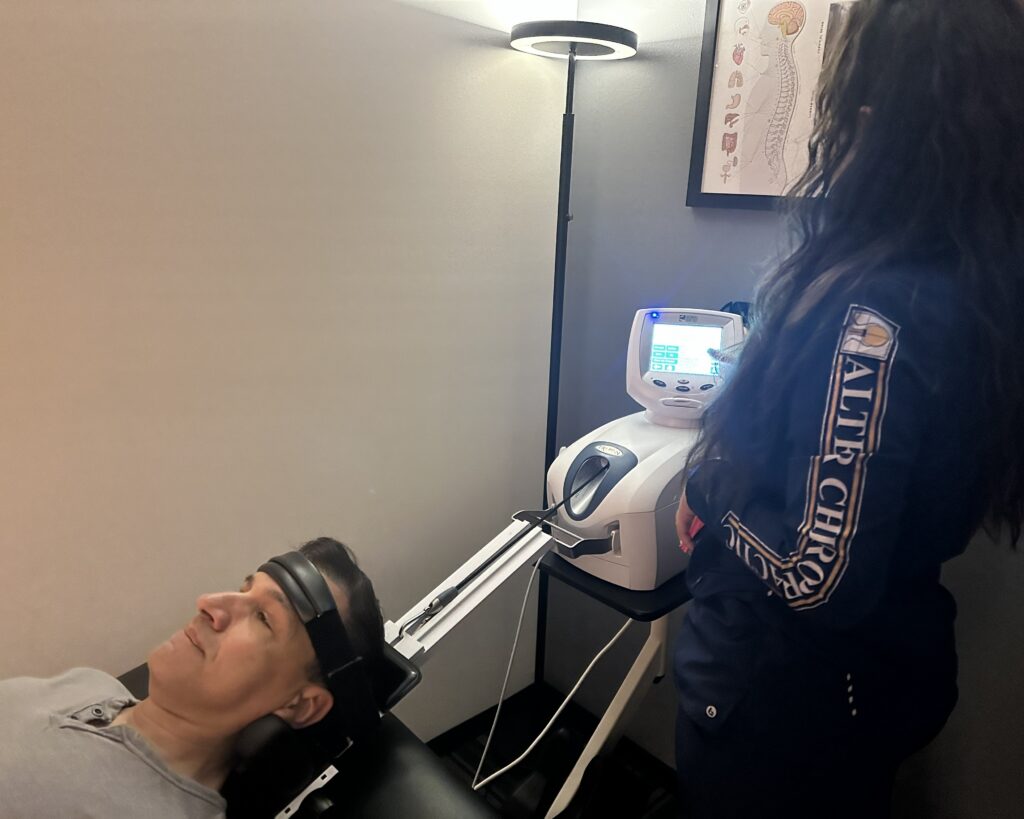

If you’ve been dealing with headaches that seem to come back no matter what you try, you’re not alone. Millions of people reach for over-the-counter pain relievers every day, assuming their recurring head pain is just stress or tension. But here’s something worth knowing: many headaches that feel like classic “tension headaches” are actually being driven by something happening in your neck. Here at Alter Chiropractic in Delray Beach, FL, Dr. Ryan Alter sees this pattern regularly — patients who have been managing headaches for months or even years, only to discover that the real source of their pain is a problem in the cervical spine. Understanding the difference could genuinely change your life.
What is a cervicogenic headache?
A cervicogenic headache is a type of head pain that originates from structures in the neck — including the joints, muscles, nerves, or discs of the cervical spine. Unlike a primary headache disorder (such as migraines or classic tension-type headaches), cervicogenic headaches are considered secondary headaches, meaning they are a symptom of an underlying neck issue rather than a condition in and of themselves.
- Sign #1: Your Headache Starts at the Base of Your Skull
- Sign #2: Neck Movement Makes It Worse
- Sign #3: You Also Have Neck Stiffness or Shoulder Tension
- Sign #4: Your Headaches Follow a Predictable Pattern on One Side
- Sign #5: Pain Relievers Only Help Temporarily — or Not at All
- How Chiropractic Care Addresses Neck-Related Headaches
- Practical Tips to Reduce Neck-Driven Head Pain
- When to See a Chiropractor for Your Headaches
- Myths vs. Facts About Tension Headaches and Neck Problems
- Final Thoughts from Alter Chiropractic in Delray Beach
Sign #1: Your Headache Starts at the Base of Your Skull
One of the clearest indicators that a headache is coming from your neck rather than purely from tension or stress is where it starts. Cervicogenic headaches typically originate at the base of the skull — in the area where your neck meets the back of your head. From there, the pain often radiates forward, wrapping around one or both sides of the head, sometimes reaching behind the eyes or into the temples.
This happens because the upper cervical spine (the top three vertebrae in your neck) shares a nerve pathway with the trigeminal nerve, which is responsible for sensation in much of your head and face. When joints or muscles in this area are irritated or dysfunctional, the brain can interpret those pain signals as coming from the head itself. This phenomenon is called referred pain, and it’s one of the main reasons neck-driven headaches are so frequently mistaken for tension headaches.
If you find yourself pressing on the base of your skull and noticing that your headache feels worse or that the pain radiates forward, that’s a meaningful clue worth taking seriously. Dr. Ryan Alter at Alter Chiropractic evaluates this exact area during a thorough cervical assessment to help determine whether the neck is contributing to your head pain.
Sign #2: Neck Movement Makes It Worse
This is one of the most telling signs that your headache has a cervical component. For most primary tension headaches, turning or tilting your head doesn’t significantly change the character of the pain. But with cervicogenic headaches, specific neck movements — especially turning your head to one side, looking down at a screen, or extending your neck backward — can noticeably intensify the headache or even trigger one from scratch.
Sustained postures are a common culprit here in South Florida. Whether you’re spending hours at a computer, working in a seated office job, or frequently looking down at your phone, the cumulative strain on your cervical spine adds up. Over time, these postures create muscle imbalances, restrict joint mobility, and place extra load on the discs and facet joints of the neck. When those structures become sensitized or irritated, even normal head movements can provoke a headache response.
Pay attention to whether your headaches tend to develop or worsen after long periods of looking at a screen, driving, or working in a fixed head position. If there’s a clear postural or movement-related pattern, the neck is almost certainly involved. This kind of information is exactly what Dr. Ryan Alter uses to guide a thorough evaluation and develop a personalized care plan at Alter Chiropractic.
Sign #3: You Also Have Neck Stiffness or Shoulder Tension
When patients come into Alter Chiropractic in Delray Beach, FL complaining of frequent headaches, one of the first questions Dr. Ryan Alter asks is whether they also experience stiffness in their neck or tightness across the top of their shoulders. The answer is yes far more often than people expect — and many patients hadn’t even connected the two symptoms.
The muscles of the upper cervical spine and shoulders — including the suboccipital muscles, upper trapezius, levator scapulae, and sternocleidomastoid — are intimately connected to both neck mechanics and headache production. When these muscles are chronically tight, they can compress nerves and blood vessels, restrict joint motion, and create a constant state of low-grade tension that eventually manifests as a headache. It’s a cycle: tight muscles put pressure on sensitive structures, which generates pain signals, which cause more muscle guarding, which perpetuates the problem.
If your headaches come paired with a stiff neck in the morning, tightness between your shoulder blades, or difficulty looking over your shoulder while driving, these aren’t separate, unrelated complaints. They are likely part of the same underlying problem — a neck that is not moving or functioning the way it should.
Sign #4: Your Headaches Follow a Predictable Pattern on One Side
True tension headaches typically produce a band-like pressure that wraps around the entire head. Cervicogenic headaches, by contrast, tend to be more one-sided — and they often follow a very consistent, predictable pattern each time they occur. You might notice that the pain always seems to start on the right side of your neck before spreading toward your right temple, or that it reliably appears behind your left eye after a long workday.
This one-sided, patterned presentation is a hallmark feature of cervicogenic head pain and reflects the fact that a specific joint, disc, or nerve on one side of the cervical spine is being repeatedly irritated. Because the anatomy is consistent, the pain pathway tends to be consistent as well. You essentially keep triggering the same dysfunctional structure, and your nervous system responds the same way each time.
This predictability can actually be a helpful diagnostic clue for your chiropractor. When Dr. Ryan Alter assesses patients at Alter Chiropractic, identifying the specific side, location, and movement patterns associated with a headache helps pinpoint which cervical levels may be involved and which structures need the most attention. Getting to that root cause is exactly the philosophy that has guided this practice since 2006.
Sign #5: Pain Relievers Only Help Temporarily — or Not at All
Perhaps the most frustrating experience for people dealing with cervicogenic headaches is that over-the-counter medications offer limited, short-term relief at best. This makes complete sense once you understand the underlying mechanism. Pain relievers work by reducing inflammation or blocking pain signals chemically, but they do nothing to correct the joint restriction, muscle imbalance, or postural dysfunction that is producing those signals in the first place.
If your neck is not moving properly — if a joint is stuck, a disc is under abnormal load, or the muscles along your cervical spine are chronically overworked — taking ibuprofen is like turning off a smoke alarm without addressing the fire. The pain may quiet down for a few hours, but the structural problem remains, and the headache reliably returns. Many patients here in Delray Beach describe a cycle of taking medication every few days for years, never quite breaking free from the pattern.
There’s also a condition worth being aware of called medication overuse headache (sometimes called rebound headache), where taking pain relievers too frequently can actually make headaches worse over time. If you find yourself reaching for pain relief multiple times per week and still not getting lasting results, that’s a strong signal that a structural evaluation — rather than another dose of medication — may be what you actually need.
How Chiropractic Care Addresses Neck-Related Headaches
Chiropractic care is one of the most well-studied conservative approaches for cervicogenic headaches. Evidence from organizations including the American Chiropractic Association and research published in peer-reviewed journals suggests that spinal manipulation and manual therapy of the cervical spine can be effective in reducing the frequency and intensity of headaches that originate from the neck. It’s a non-surgical, drug-free approach that targets the actual structural cause of the pain rather than masking symptoms.
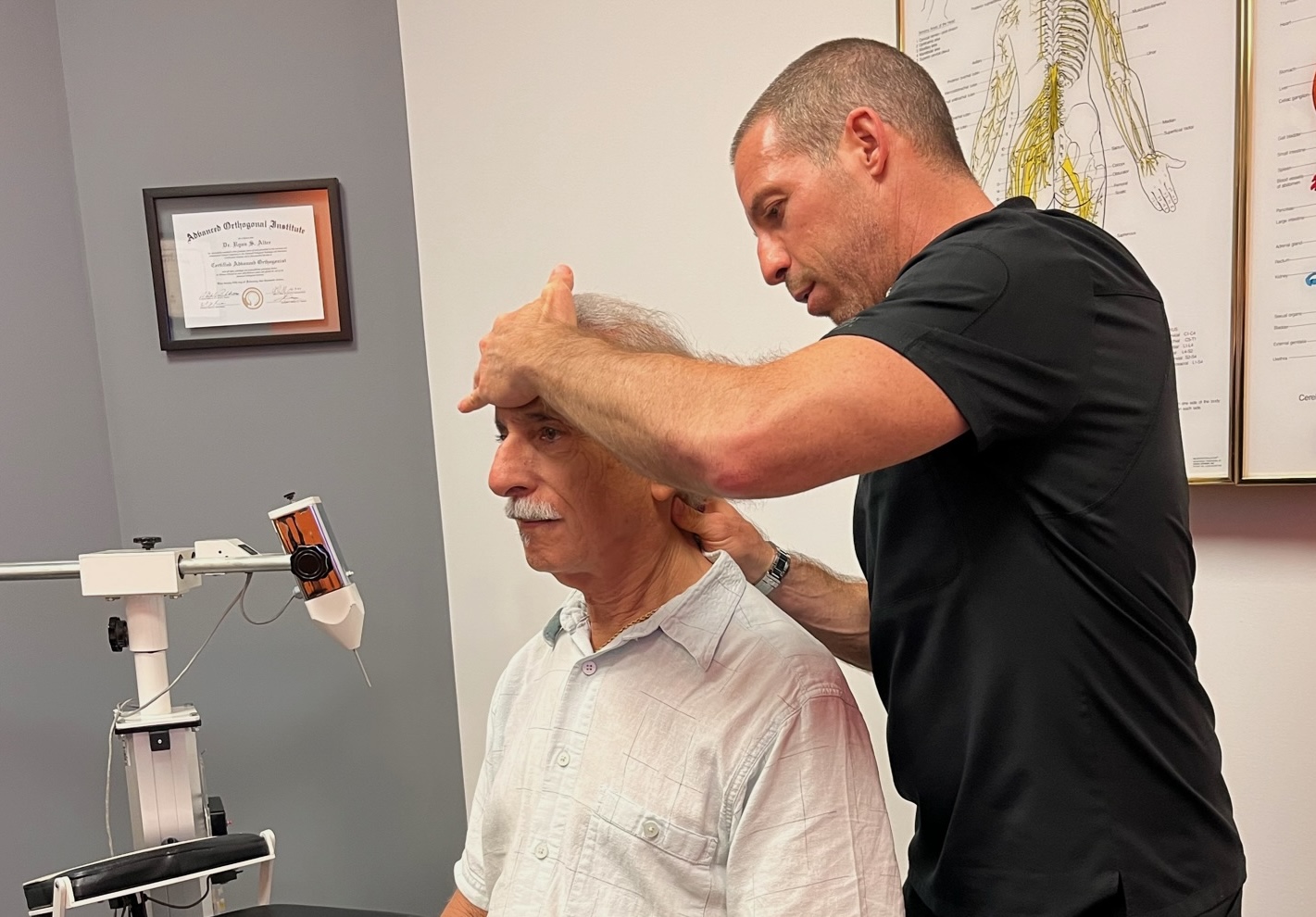
At Alter Chiropractic in Delray Beach, the approach begins with a thorough evaluation of the cervical spine — assessing range of motion, joint mobility, muscle function, and posture. Dr. Ryan Alter takes the time to identify the root cause of your specific headache pattern before recommending any treatment. That’s a core principle of this practice: treating the problem, not just the symptom.
Care for neck-related headaches may include chiropractic adjustments to restore proper joint motion in the cervical spine, soft tissue work to address muscle tightness in the neck and shoulders, and postural correction guidance to help you avoid the positions and habits that keep triggering the problem. For many patients in South Florida who have been dealing with chronic headaches, this kind of targeted, root-cause approach produces meaningful, lasting improvement where medication alone never could.
Practical Tips to Reduce Neck-Driven Head Pain
While professional evaluation is important for lasting relief, there are also things you can do at home and at work to reduce the burden on your cervical spine and lower the frequency of headaches. These aren’t quick fixes, but consistent habits make a real difference over time.
First, pay close attention to your screen position. Your monitor should be at approximately eye level so that your head isn’t tilted downward or craning forward. Even a slight forward head position sustained over hours creates significantly more compressive force on the cervical spine than a neutral upright posture. If you work from home here in South Florida, this is an especially easy adjustment that pays dividends quickly.
Second, take regular movement breaks. Sitting or standing in a fixed head position for extended periods is one of the most common drivers of cervicogenic headaches. Setting a reminder to gently move your neck through its range of motion every 45 to 60 minutes — slow, controlled rotations and side-bends — helps prevent the muscle stiffness and joint restriction that fuel head pain.
Third, be mindful of your sleeping position. Sleeping on your stomach with your head rotated to one side for hours at a time places significant rotational strain on the upper cervical spine. If you’re a stomach sleeper and you wake up with headaches, that’s a connection worth exploring with Dr. Ryan Alter during your next visit to Alter Chiropractic.
When to See a Chiropractor for Your Headaches
If your headaches are recurring, following a pattern you recognize from the signs described above, and not responding adequately to self-care or over-the-counter medication, it’s a reasonable time to seek a chiropractic evaluation. You don’t need to wait until you’re in severe pain or have exhausted every other option. Catching and addressing cervical dysfunction earlier tends to produce better outcomes and avoids the long-term muscle imbalances and joint degeneration that can develop when the problem is ignored.
There are also certain headache symptoms that warrant immediate medical attention rather than chiropractic care. Seek emergency care right away if you experience a sudden, severe headache that feels unlike anything you’ve had before (sometimes described as a “thunderclap” headache), a headache accompanied by fever, stiff neck, confusion, vision changes, weakness, or numbness, or a headache following a head injury. These symptoms can indicate serious medical conditions that require urgent evaluation. A good chiropractor will always refer you to the appropriate provider if your presentation suggests something beyond musculoskeletal care.
Tension Headache vs. Cervicogenic Headache: Key Differences
| Feature | Typical Tension Headache | Cervicogenic Headache |
|---|---|---|
| Location | Band-like pressure around entire head | Usually one-sided; starts at base of skull |
| Trigger | Stress, fatigue, dehydration | Neck movement, prolonged posture, neck stiffness |
| Effect of Neck Movement | Minimal change in pain | Movement may worsen or trigger headache |
| Associated Symptoms | Scalp tenderness, fatigue | Neck stiffness, shoulder tension, restricted range of motion |
| Response to Pain Relievers | Often provides moderate relief | Frequently limited or temporary relief only |
| Underlying Cause | Muscle tension, stress, lifestyle | Cervical joint restriction, disc irritation, nerve sensitization |
| Conservative Treatment | Stress management, hydration, rest | Chiropractic adjustment, manual therapy, postural correction |
Myths vs. Facts About Tension Headaches and Neck Problems
Myth: If it’s “just a headache,” I should push through it and take ibuprofen.
Fact: Headaches are a signal from your body that something isn’t right. Repeatedly masking them with medication without investigating the cause doesn’t resolve the underlying problem. For cervicogenic headaches, addressing the structural issue in the neck is what creates lasting change — not continuing to suppress the pain signal.
Myth: Only people who’ve been in car accidents get neck-related headaches.
Fact: While whiplash injuries absolutely can cause cervicogenic headaches, they are just as commonly caused by everyday habits — prolonged screen time, poor desk posture, sleeping position, and repetitive movements. You don’t need a dramatic injury to develop a neck problem that drives headaches.
Myth: Chiropractic adjustments to the neck are dangerous.
Fact: Cervical chiropractic adjustments performed by a licensed chiropractor have a well-established safety record in the research literature. Serious adverse events are rare. Dr. Ryan Alter conducts a thorough evaluation before any treatment to ensure care is appropriate for each individual patient at Alter Chiropractic.
Myth: If scans come back normal, there’s nothing structurally wrong.
Fact: Standard imaging like X-rays and MRIs doesn’t capture everything. Joint mobility restrictions, muscle imbalances, and early functional changes in the spine often don’t show up on imaging but can still produce significant pain. A hands-on chiropractic assessment evaluates function and movement in ways that imaging cannot.
Myth: I’ve had these headaches so long, nothing can help at this point.
Fact: Chronic doesn’t mean permanent. Many patients who have dealt with headaches for years experience meaningful improvement once the cervical component is properly identified and addressed. The length of time you’ve had the problem doesn’t eliminate the possibility of relief — it just means the underlying issue has been going unaddressed.
Final Thoughts from Alter Chiropractic in Delray Beach
Living with recurring headaches is exhausting — physically and emotionally. When you’ve tried the same approaches over and over and never quite gotten to the bottom of what’s causing your pain, it’s easy to feel discouraged. But if any of the five signs in this article sound familiar, there’s a genuinely good reason to feel hopeful: neck-related headaches respond well to conservative care when the root cause is properly identified and treated.
At Alter Chiropractic in Delray Beach, FL, Dr. Ryan Alter has spent nearly two decades helping South Florida families find real answers to chronic pain — not temporary band-aids, but actual solutions that address the underlying problem. The approach here has always been rooted in the belief that your body has a remarkable capacity to heal when it’s given the right support and when the true cause of the problem is finally addressed.
If you’re tired of reaching for pain relievers that never quite solve the problem, if your headaches always seem to start in your neck, or if you’ve simply never had anyone take a close, thorough look at your cervical spine in relation to your headaches — this is an invitation to do something different. The Delray Beach community deserves care that actually works, and that’s what Alter Chiropractic is here to provide.
Frequently Asked Questions
Can a chiropractor actually help with headaches?
Yes, particularly for headaches that have a cervical or musculoskeletal component. Evidence from multiple research bodies, including the American Chiropractic Association, supports spinal manipulation and manual therapy as effective conservative treatments for cervicogenic headaches. Results vary by individual, and a proper evaluation is necessary to determine whether chiropractic care is appropriate for your specific situation.
How do I know if my headaches are coming from my neck?
Common indicators include pain that starts at the base of the skull and radiates forward, headaches that worsen with specific neck movements or sustained postures, one-sided head pain that follows a consistent pattern, and accompanying neck stiffness or shoulder tension. A chiropractic evaluation is the best way to determine whether the cervical spine is contributing to your headaches.
How long does it take to see improvement with chiropractic care for neck headaches?
This varies depending on the severity and duration of the underlying neck problem, as well as individual factors like age, posture habits, and lifestyle. Some patients notice improvement within a few visits, while others with longer-standing issues may require a more extended course of care. Dr. Ryan Alter will discuss realistic expectations with you during your evaluation at Alter Chiropractic.
Is it safe to get chiropractic adjustments in the neck area?
Cervical chiropractic care performed by a licensed, experienced chiropractor is considered safe for most patients. Before any treatment, Dr. Ryan Alter conducts a thorough history and physical assessment to identify any contraindications and ensure the most appropriate and safe approach is used.
What’s the difference between a cervicogenic headache and a migraine?
Migraines are a primary neurological headache disorder often accompanied by nausea, light sensitivity, and sound sensitivity. Cervicogenic headaches are secondary headaches caused by a structural problem in the neck. The two can sometimes overlap or coexist, which is why a proper evaluation by a qualified professional is important for accurate identification and effective care.
Do I need a referral to see a chiropractor for headaches in Florida?
In Florida, you can see a licensed chiropractor directly without a medical referral. If you’re experiencing recurring headaches and suspect your neck may be involved, you can contact Alter Chiropractic in Delray Beach to schedule an evaluation with Dr. Ryan Alter without needing to go through another provider first.
TL;DR — Key Takeaways
- Many headaches diagnosed as “tension headaches” are actually cervicogenic headaches — meaning they originate from a problem in the neck, not the head itself.
- Key signs that your neck is the source include pain starting at the base of the skull, headaches triggered or worsened by neck movement, one-sided pain patterns, accompanying neck stiffness, and poor response to pain relievers.
- Chiropractic care addresses the root cause of cervicogenic headaches by restoring proper cervical joint function, reducing muscle tension, and correcting postural habits — rather than masking symptoms.
- Simple changes like improving screen ergonomics, taking regular movement breaks, and adjusting sleep position can help reduce headache frequency when combined with professional care.
- Dr. Ryan Alter at Alter Chiropractic in Delray Beach, FL specializes in finding and treating the underlying cause of chronic pain, including neck-related headaches, using a natural, non-invasive approach.