Does Spinal Decompression Work? What the Research Says
An honest look at the research on spinal decompression and the DRX9000: what the studies found, where the evidence is thin, and who tends to do best.
Chiropractic Care · October 27, 2026
Short answer: spinal decompression helps many people with disc-related low back pain and sciatica, and several studies show patients’ pain dropping during treatment. But most of those studies are small and have no comparison group, and reviews of the research call the evidence limited. It’s a reasonable conservative option for the right patient, not a guaranteed fix.
You’ll find plenty of bold claims online about spinal decompression and the DRX9000, including success rates of “86%” or “9 out of 10.” We’d rather show you what the research actually says, including the parts that don’t make for good advertising, so you can make a clear decision about your own back.
First, what are researchers actually testing?
“Spinal decompression” in these studies means non-surgical, motorized traction: you lie on a table while a computer-controlled motor gently pulls and relaxes the spine in cycles. Researchers usually measure a few things:
Pain, most often on a 0 to 10 scale, where 0 is no pain and 10 is the worst imaginable.
Function, meaning how much the pain gets in the way of everyday life, like sitting, walking, working and sleeping.
Disc height, measured on imaging, in a few studies.
Nerve signs, like reflexes, strength and sensation in the legs.
It also helps to know how strong different kinds of studies are. A chart review looks back at the records of patients who were already treated. It’s useful, but it can’t prove the treatment caused the improvement. A randomized controlled trial splits patients into groups that get different treatments, which is the best way to tell what actually works. A systematic review pulls together all the trials on a question and weighs their quality.
What the studies found
DRX9000 disc height study (2010). Researchers looked back at the records of 30 adults (average age 65) with low back pain from a herniated or degenerating disc who had six weeks of DRX9000 treatment, with CT scans before and after. On average, pain scores fell from 6.2 to 1.6 on the 0 to 10 scale, and disc height increased from 7.5 mm to 8.8 mm. The authors found that more disc height went along with less pain, although the link was modest. It was published in BMC Musculoskeletal Disorders.
DRX9000 chart review (2008). A review of 94 patients with chronic disc-related low back pain treated on the DRX9000 reported average pain falling from about 6 to under 1 by the end of the eight-week program. The authors called the results preliminary and said randomized, blinded trials were needed.
Multi-clinic chart review (2025). A study in Military Medicine reviewed 267 patient records from seven community clinics where patients had at least 20 sessions of non-surgical spinal decompression for low back pain over six to eight weeks. Average pain fell from 6.9 to 2.5, and the authors also reported improvements in nerve testing and daily activities. The results held across patients whose pain was recent and those who had lived with it for a long time. The study doesn’t name the table brand used.
Where the evidence is thin
All three studies above looked back at patients who were already treated. None compared decompression with a placebo or another treatment, so they can’t prove the table caused the improvement. Several things can make patients look better in studies like these:
Time. A lot of back pain, including pain from a herniated disc, eases over weeks to months on its own.
Everything else in the plan. Patients in these studies often had other care alongside decompression, like adjustments, exercise or medication.
Who gets counted. Patients who drop out early, often the ones who aren’t improving, may not show up in the final numbers.
When researchers pooled the trials that did compare treatments, the picture was more cautious. A 2006 systematic review in Pain Practice found the studies were few and of low quality, and concluded that the benefit of motorized decompression for chronic disc-related back pain was not yet proven. Several large insurers, including UnitedHealthcare, list motorized decompression as unproven for the same reason, which is why it’s often not covered.
There’s also a gap in what’s been studied. Most of the research is on the low back. There’s much less on decompression for the neck.
So the honest summary is: promising results in real patients, but not the kind of large, controlled trials that would settle the question.
Why some patients improve
Researchers think decompression may help in a few ways, though these are proposed explanations rather than proven ones:
Less pressure inside the disc. Gentle, cycled stretching may lower the pressure in a bulging or herniated disc, giving an irritated nerve more room.
Better fluid exchange. Spinal discs have very little direct blood supply. They rely on fluid moving in and out as you move. Cycles of stretch and rest may help that exchange.
Calmer muscles. A slow, controlled stretch can help muscles that have been guarding a painful back relax.
Who tends to do best
In practice, decompression tends to suit people whose pain is mechanical and disc-related, such as:
Back pain that hasn’t settled with rest, medication or exercise
It also works best as part of a plan that keeps the spine moving, with adjustments and simple exercises, rather than on its own.
It isn’t right for fractures, infections, tumors, pregnancy, severe osteoporosis or some types of spinal hardware. And some symptoms need urgent medical care instead:
Numbness in the groin area
Loss of bladder or bowel control
Fever with back pain
Leg weakness that keeps getting worse
How to read decompression claims online
A success rate with no study behind it is marketing, not evidence.
“FDA-cleared” means a device can be sold for certain uses. It isn’t the same as proof that it works for everyone.
Before-and-after X-rays or MRIs of one patient are interesting, but one patient isn’t a study.
Testimonials are real experiences, but people who didn’t improve rarely write them.
How we use the research at Alter Chiropractic
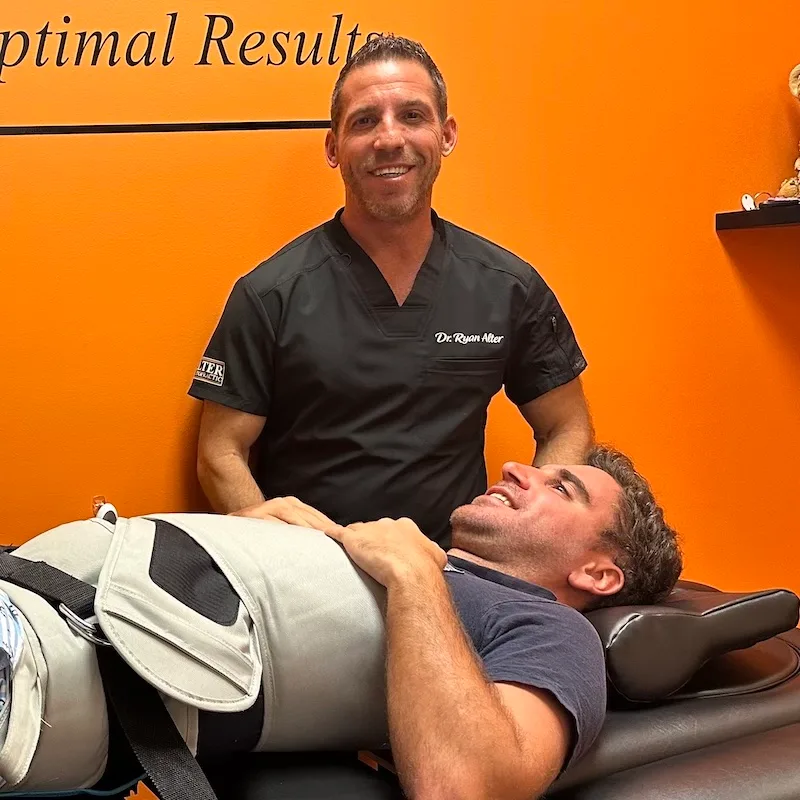
We examine you first. Dr. Ryan Alter checks your spine and nerves, takes X-rays in the office when needed and tells you honestly whether you’re a good candidate.
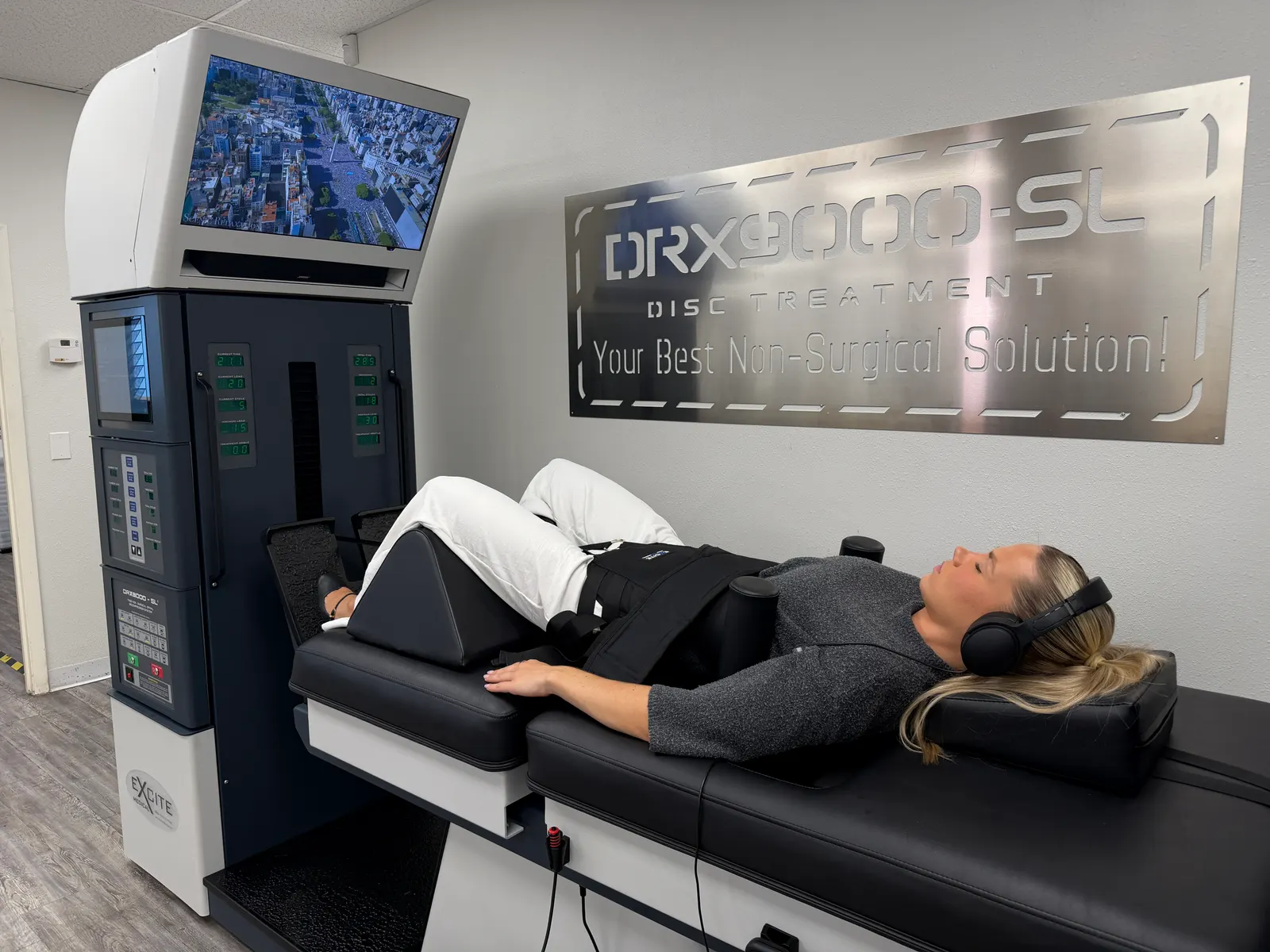
We match the table to the problem. Our Triton tables and the DRX9000-SL, our most advanced system, both treat the neck and low back. Dr. Alter explains which one he’d use and why.
We don’t promise a percentage. Nobody can guarantee your result, and we won’t pretend to.
We track your progress. If you’re not improving as expected, we change the plan or point you to the right specialist.