Spinal Decompression vs. Back Surgery: How to Decide
Non-surgical spinal decompression and back surgery compared: who each one suits, the warning signs that need a surgeon, and why most people try conservative care first.
Chiropractic Care · October 27, 2026
Short answer: non-surgical spinal decompression gently stretches the spine on a computer-controlled table over a series of visits, with no incisions or recovery time. Back surgery physically removes or trims what is pressing on a nerve. For most disc-related back pain and sciatica, conservative care comes first. Surgery is for warning signs, or for pain that doesn’t improve with good conservative care.
If you’ve been told you have a herniated disc or sciatica, the word “surgery” may already have come up. That can be scary, especially when you’re in a lot of pain. Here’s how non-surgical spinal decompression compares, which situations really do call for a surgeon, and how to tell which path fits you.
Two very different ways to take pressure off a nerve
The words sound alike, but they are completely different things.
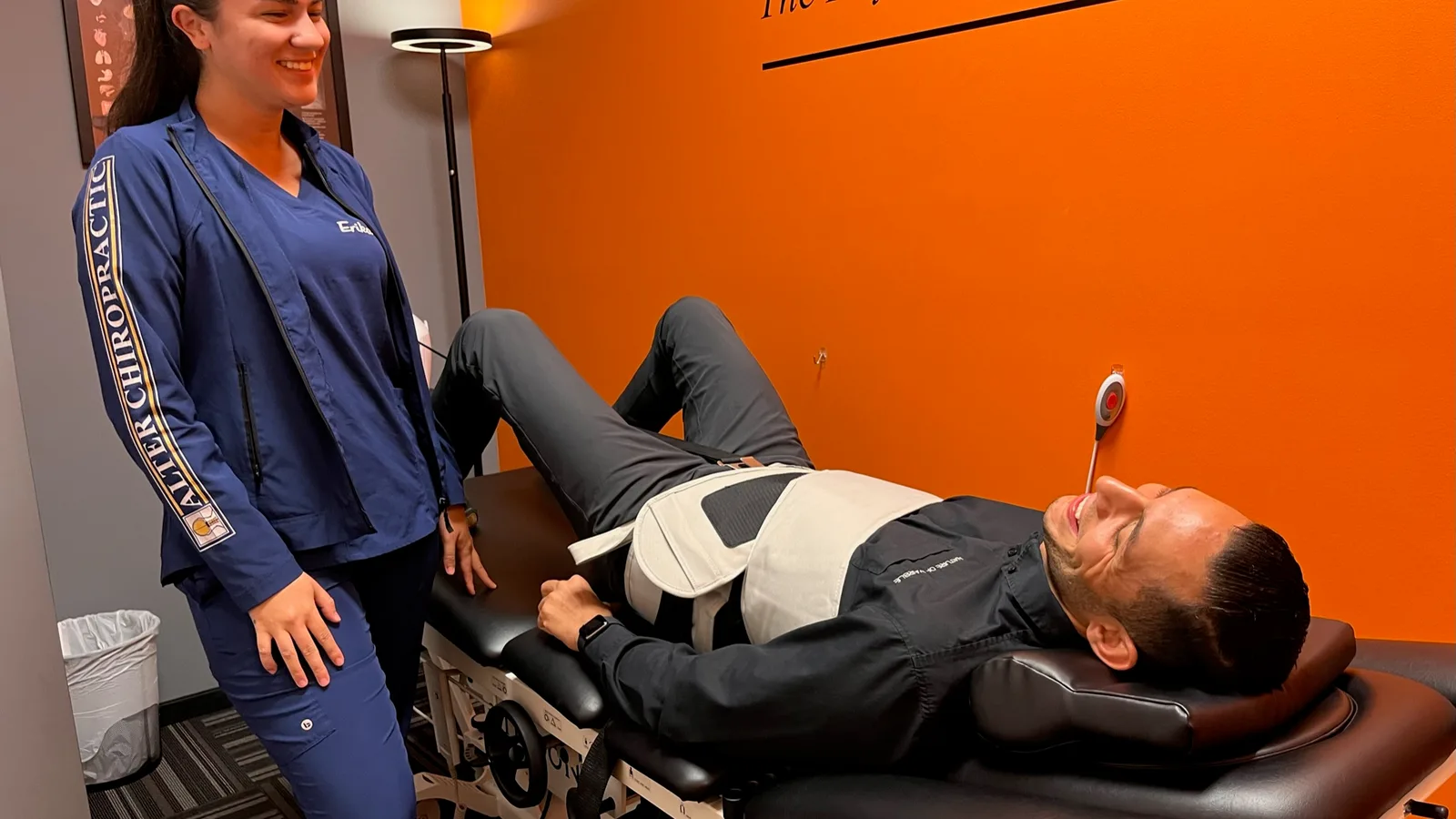
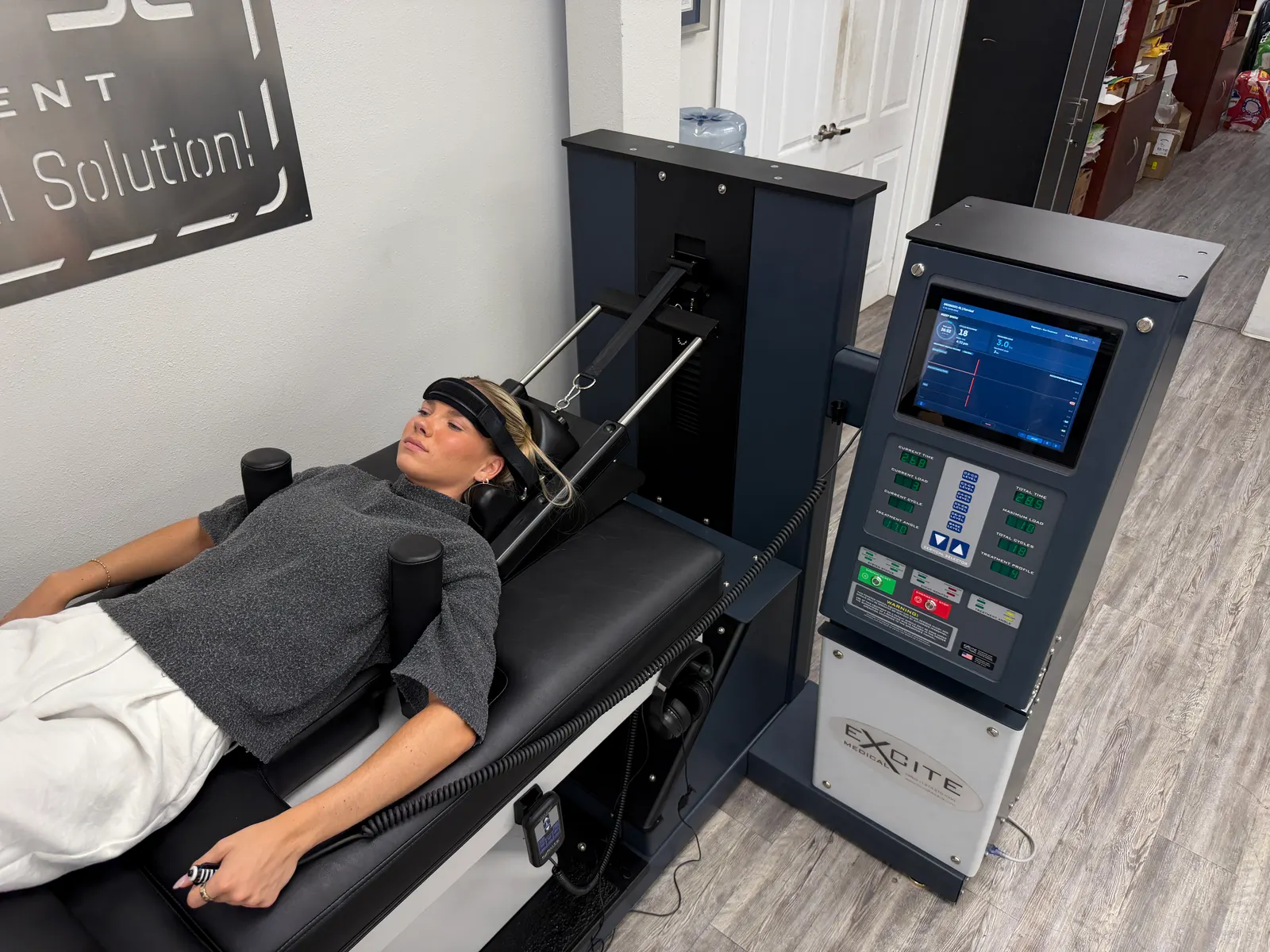
Non-surgical spinal decompression is a form of computer-controlled traction. You lie on a padded table, fully clothed, while it gently stretches the spine in slow cycles to ease pressure on discs and nerves. At our Delray Beach office we use Triton tables and the DRX9000-SL, our most advanced system, both for the neck and low back. Care is a series of visits over several weeks.
Surgical decompression is an operation. A surgeon removes the part of a disc, bone or ligament that is pressing on the nerve.
Common types of back surgery
If surgery is recommended, it’s usually one of these:
Microdiscectomy. The surgeon removes the piece of a herniated disc that is pressing on a nerve, through a small incision. It’s one of the most common operations for sciatica caused by a disc.
Laminectomy. The surgeon removes part of the bone at the back of a vertebra to make more room in a narrowed spinal canal, as in spinal stenosis.
Spinal fusion. Two or more vertebrae are joined so they no longer move against each other. It’s a bigger operation, usually reserved for instability, some deformities or problems other surgeries haven’t solved.
Each of these can help the right patient. Each also carries the usual risks of surgery, such as infection, bleeding, nerve injury and problems with anesthesia, plus a recovery period. Some people need a second operation later.
When surgery should be considered right away
Some symptoms need a medical provider urgently, not a series of decompression visits:
Loss of bladder or bowel control
Numbness in the groin or inner thighs
Leg weakness that keeps getting worse, or a foot that starts to drag
Back pain with fever, unexplained weight loss or a history of cancer
Back pain after a serious fall or accident
The first two can be signs of cauda equina syndrome, where the nerves at the bottom of the spinal cord are badly compressed. It’s rare but a true emergency. If any of these apply, call your doctor or go to the emergency room.
When conservative care makes sense first
For most people with disc-related back pain or sciatica and none of the warning signs above, medical guidelines recommend starting with non-drug, non-surgical care. The American College of Physicians, for example, recommends non-drug treatments, including spinal manipulation, as a first step for most low back pain. Many disc problems calm down with the right conservative care, and surgery stays available if they don’t.
Conservative care can include chiropractic adjustments, decompression, intersegmental traction, exercise, and changes to how you sit, lift and sleep. In our office, decompression is usually one part of that plan, not the whole thing.
Spinal decompression vs. back surgery at a glance
Non-surgical decompression
Back surgery
Incisions or anesthesia
None
Yes
Recovery time
None. Most people go about their day
Days to weeks, depending on the operation
How relief comes
Gradually, over a series of visits
Leg pain may ease quickly after the operation
Main risks
Soreness for some patients. Not safe with certain conditions
Takes time and commitment. Not covered by many insurers
Recovery time, higher cost, can’t be undone
Best suited to
Disc-related back pain and sciatica without warning signs
Warning signs, or pain that doesn’t improve with conservative care
Who is a good candidate for decompression
Decompression tends to suit people who have:
A herniated or bulging disc, sciatica or degenerative disc disease
No warning signs that need a surgeon now
Pain that hasn’t settled with rest, medication or exercise
Time to commit to a series of visits
It isn’t right for fractures, infections, tumors, pregnancy, severe osteoporosis or some types of spinal hardware. If you’ve already had back surgery, decompression may or may not be an option, depending on what was done. Dr. Alter will look at your history and tell you honestly.
If you’ve been told you need surgery
A recommendation for surgery isn’t always urgent. Unless you have warning signs, it’s reasonable to ask questions first:
Do I have any signs that mean I need surgery now?
What exactly would the operation fix, and what are the risks?
What has my conservative care actually included so far?
What would a decompression plan involve for my problem, and what would it cost?
If I try conservative care first, how will we know whether it’s working, and when should I come back to a surgeon?
A good surgeon and a good chiropractor should both be comfortable with those questions. Our job isn’t to talk you out of surgery you need. It’s to make sure you’ve had a fair chance at getting better without it.
How Dr. Alter helps you decide
At your free consultation, Dr. Ryan Alter examines your spine and nerves, takes X-rays in the office when needed and reviews any MRI you already have. If decompression is a good fit, he explains which table he’d use, the plan and the cost before anything is done. If anything suggests you need a surgeon or other specialist, he’ll tell you and point you to the right place.